
Insight Preview
You're the Hiring Manager Now
Here's something that took me a long time to understand, and it will sound familiar to anyone who has hired in a technical or tightly regulated field.
When I was building in cybersecurity, the requirements for many roles were concrete. You needed specific clearances, certifications, and exposure to threat environments that most people never encounter. The market made the bar legible.
And yet I still made bad hires. The checklist was not the problem. The evaluation was.
What a process actually requires
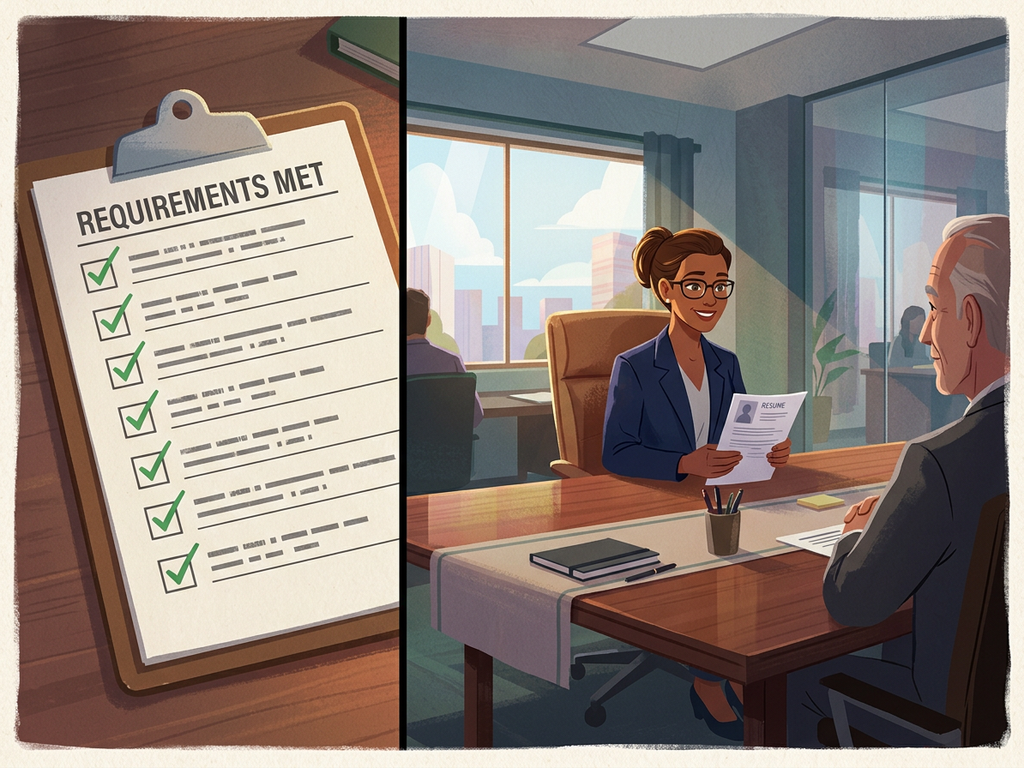
A real hiring process does three things: it defines the outcome you need, evaluates whether a candidate can produce that outcome, and does both consistently enough that the decisions can be trusted across every hire you make.
Most founders already know what the job needs. The breakdown happens in evaluation and consistency. Distinguishing between people who understand a domain and people who can perform inside it is hard, especially in fields where a wrong call is expensive.
Research cited by the U.S. Department of Labor and broader hiring studies reinforces the cost. A bad hire can easily consume at least 30% of first-year earnings, and senior mistakes can run far higher once onboarding drag, lost productivity, and restart costs are included.
Consistency is just as hard. Founders make decisions between product work, sales calls, and board updates. If the fifth candidate gets a different standard than the first, you do not have a system. You have isolated judgments that cannot learn from each other.
The compounding problem
A bad hire at employee number three is different from a bad hire at employee number thirty. Early hires do not just fill seats. They define what good looks like inside the company and shape culture before the company has even named it.
That makes the decision larger than the role in front of you. You are not only filling a gap for today. You are setting a reference point for every future hire that follows.
The numbers underline the risk. CareerBuilder found that nearly three in four employers have made a bad hire, and pressure to move fast was one of the most common drivers behind the miss.
The most painful cost is rarely severance alone. It is the organizational energy spent compensating for a misalignment that should never have made it through the door.

Where the series goes next
The next two articles in this series get practical. Part 2 focuses on the job description problem: most founders write toward the person they imagine instead of the outcome the role must produce.
Part 3 moves into evaluation itself: how to make sharper calls when applications pile up, time disappears, and there is no recruiter to absorb the first filter for you.
Before any of that, the starting question matters. What does success in this role look like 90 days from now, and how would you know if you were looking at it?
If you can answer that precisely, you have the foundation of a real process. If you cannot, more credentials and more interview rounds will not close the gap.
Conclusion
- Role clarity is necessary, but it is not enough. Founders need an evaluation process they can trust under pressure.
- The real leverage starts when success is defined concretely and every candidate is measured against the same outcome, not against shifting instinct.
References
- 1. U.S. Department of Labor. Cost of a bad hire discussion summarized via Apollo Technical. https://www.apollotechnical.com/cost-of-a-bad-hire/
- 2. CareerBuilder. Nearly Three in Four Employers Affected by a Bad Hire. https://www.prnewswire.com/news-releases/nearly-three-in-four-employers-affected-by-a-bad-hire-according-to-a-recent-careerbuilder-survey-300567056.html
- 3. Harvard Business Review founder hiring time estimate summarized via GoHire. https://gohire.io/blog/how-much-time-founders-waste-hiring-manually
Content pillars