
Insight Preview
Most AI Hiring Tools Aren't Doing What You Think
If you've evaluated hiring technology in the last three years, you've heard the same pitch from almost every vendor: their platform uses AI to find better candidates faster.
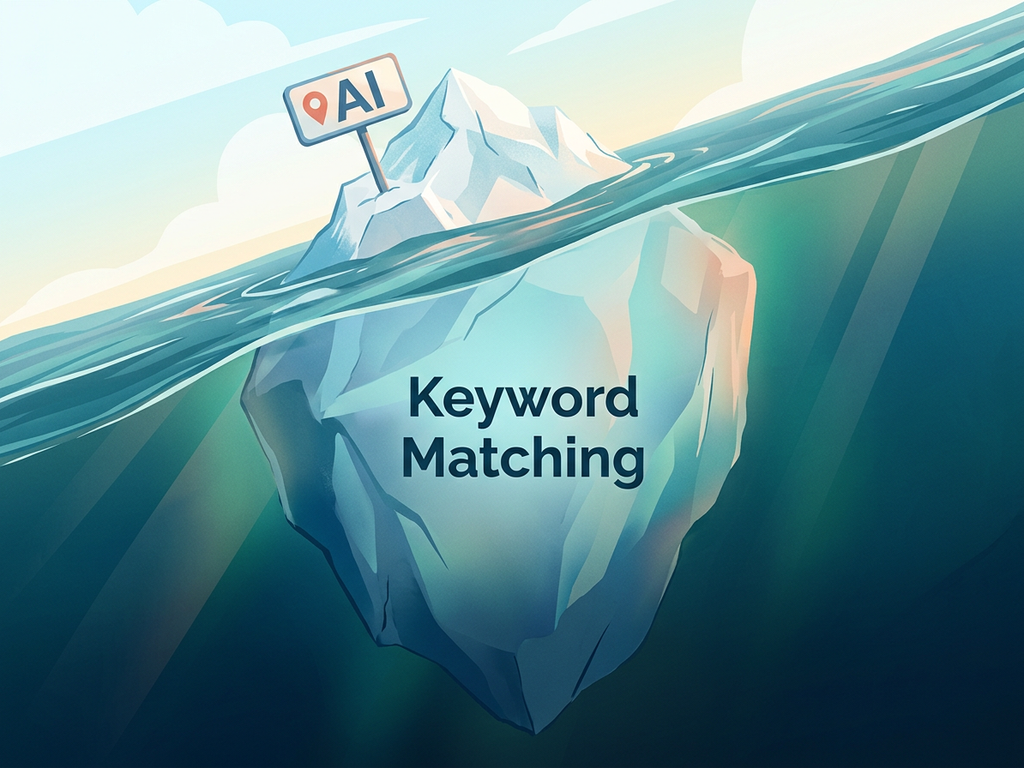
The demos look clean, the claims sound sophisticated, and the logos are reassuring. But most of the market is still selling keyword matching with a fresh coat of paint.
That distinction matters because there is a real difference between automating a broken process and improving hiring quality. Conflating the two is expensive.
What most "AI hiring tools" are actually doing
The core function in most applicant tracking systems is still matching: scanning resumes for keywords, titles, credentials, and years of experience, then ranking candidates by how closely they resemble the job description.
That is useful for managing volume, but it is not intelligence. It is pattern recognition applied to text, and the quality of the output is bounded by the quality of the criteria already baked into the system.
The market has blurred that distinction because the AI label sells. But automating resume parsing and ranking does not mean a tool understands what actually predicts success in a role.
Harvard Business School and Accenture found that 88% of surveyed employers acknowledged their own systems screen out qualified candidates because those people do not fit the exact configured parameters. The system is functioning as designed. The design is the problem.
Why "AI-powered" became a meaningless badge
The label spread because it worked commercially, not because it reliably described a technical breakthrough in hiring quality.
Adding machine-learning components to a keyword-driven system lets vendors call the product AI-powered even if the underlying evaluation logic remains fundamentally unchanged.
That creates a market where nearly every platform claims to surface the best candidates, while very few can explain what signals they are actually measuring or why those signals predict performance in your environment.
This is especially risky in enterprise settings. A generalist model trained on broad data does not automatically know what makes someone successful in your roles, on your teams, or in your geography.

The question HR leaders should be asking
The right buying question is no longer "does this use AI?" Almost every vendor can say yes in some form. The better question is what the system is actually evaluating and how that connects to performance outcomes in roles like yours.
A tool that ranks candidates by keyword density is measuring something. A tool that evaluates capability signals across actual work, context, and comparable performance history is measuring something meaningfully different.
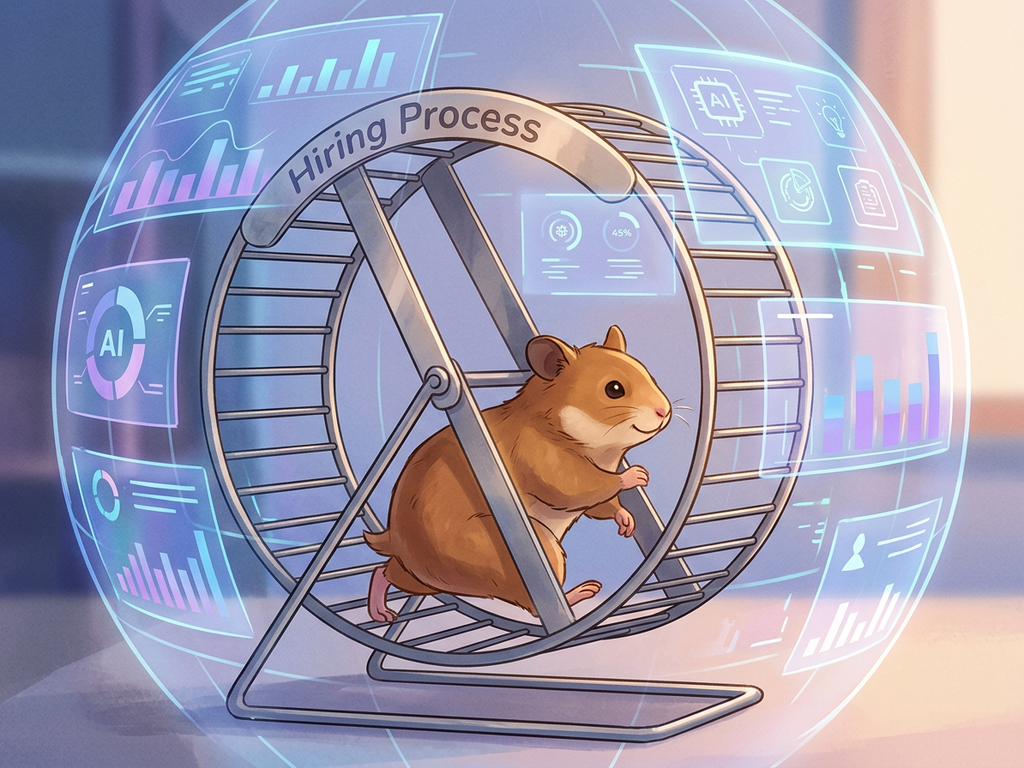
That distinction affects who reaches the interview stage, who gets an offer, and who ultimately performs once they join. If the signal does not predict performance, you have not improved hiring. You have only made your mistakes faster and more scalable.
The next article in this series moves from critique to specifics: what genuine capability evaluation looks like when the demo is over and the real system has to justify itself.
Conclusion
- Most AI hiring tools are still optimizing proxy matching, not decision quality.
- The real buying question is what signal a tool evaluates and whether that signal predicts performance in your environment.
References
- 1. Harvard Business School and Accenture. Hidden Workers: Untapped Talent. https://www.hbs.edu/managing-the-future-of-work/Documents/research/hiddenworkers09032021.pdf
- 2. Harvard Business School Working Knowledge. How to Tap the Talent Automated HR Platforms Miss. https://www.library.hbs.edu/working-knowledge/how-to-tap-the-talent-automated-hr-platforms-miss
Content pillars