
Insight Preview
The Nonlinear Career Is the New Normal
The modern workforce is anything but predictable. People pivot industries, take sabbaticals, freelance, upskill, downshift, and reinvent themselves, sometimes more than once. And yet, most job applications still expect a neat, chronological story with no gaps, no deviations, and no surprises.
That expectation isn't just outdated. For a growing share of qualified candidates, it's an active barrier. A 2024 report by the Workforce Futures Coalition found that 63% of candidates with career gaps or pivots felt compelled to explain themselves in ways that felt defensive or apologetic.¹
Nonlinear career paths are not the exception. They are the new normal. It's time hiring design caught up.
The Myth of the Perfect Timeline
Traditional applications are built around a rigid format: job title, company, start date, end date. Repeat. But that structure breaks down quickly when someone took time off to care for a loved one, launched a side business, pursued a degree mid-career, or moved countries and had to start over.
These experiences are rich with growth, resilience, and initiative. Automated screening filters and hiring managers trained on linear CVs frequently penalise them anyway. The result is a system that mistakes unconventional paths for red flags, and loses strong candidates in the process.
Nonlinear Does Not Mean Unqualified
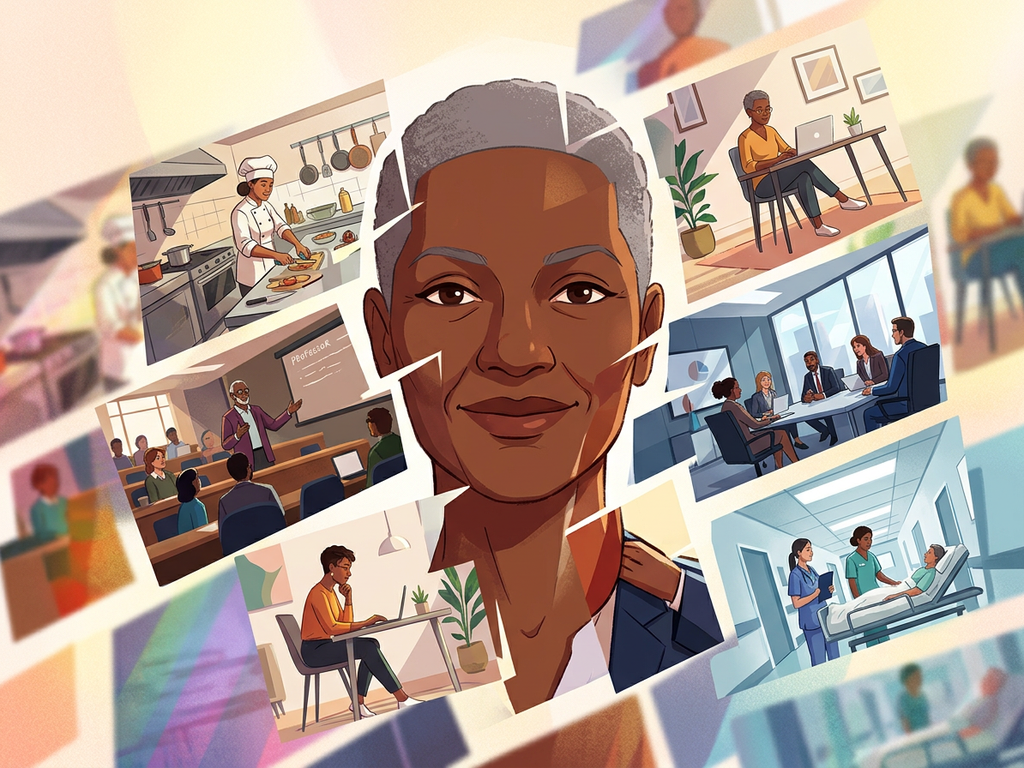
A nonlinear path often reflects exactly the qualities organisations say they want: adaptability in changing industries, curiosity to explore new skills, the courage to take risks or start over, and emotional intelligence developed through varied life experience.
Candidates who have navigated career transitions, sabbaticals, or industry pivots have typically made deliberate choices under uncertainty. That is a capability, not a liability.
Rethinking What Applications Should Ask
If the goal of a job application is to surface the best-fit candidate, then asking "What did you do from 2015 to 2018?" is often the wrong question. Better questions include: What did you learn? What motivated your choices? How did you grow? What do you want to do next?
Applications should invite storytelling, not just data entry. They should reflect the reality of modern work: fluid, flexible, and full of reinvention. Structured prompts that give candidates space to contextualise their journey produce richer signal than a date-range field ever could.
Who Gets Left Out When We Reward Linearity
When hiring systems are designed to reward uninterrupted, conventional career trajectories, specific groups are disproportionately excluded. Parents returning to work after caregiving breaks, career switchers and late bloomers, neurodiverse candidates whose paths may not follow standard patterns, and global talent from cultures with different norms around employment all face unnecessary friction.
Inclusive hiring design is not about lowering standards. It is about removing barriers that screen out qualified people for the wrong reasons.

How Professional.me Approaches Nonlinear Careers
Professional.me profiles are designed to showcase the full arc of a candidate's journey, not just the bullet points. The platform uses AI to surface skills, potential, and fit based on the substance of someone's experience, rather than filtering on the shape of their timeline.
Because belonging starts with being seen, and being seen starts with better design.
Conclusion
- The future of work is nonlinear. Applications that only reward stability and straight lines will continue to miss the people who bring the most adaptability, resilience, and genuine curiosity to a role.
- Building fairer hiring systems means asking better questions, surfacing deeper insights, and creating space for every kind of journey. That is the standard Professional.me is building toward.
- Want to see how we are redesigning the hiring experience for real-world careers? Explore our approach at [professional.me](https://professional.me).
Content pillars