Turn Headcount Debates into Evidence-Based Workforce Decisions
The platform ingests compensation, org structure, and workforce data across entities to model restructuring scenarios, detect pay inequities, find role redundancy, and forecast workforce composition years ahead.
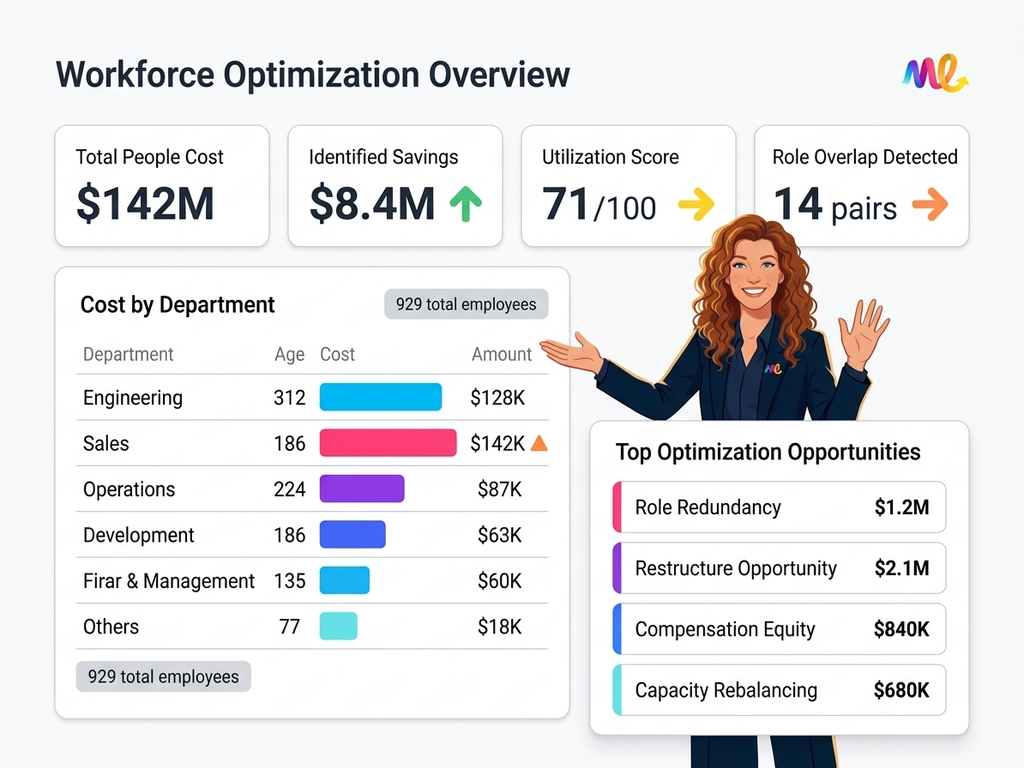
Platform Overview
One Intelligence Layer for Cost, Structure, and Composition
People cost is 60-80% of operating spend. Most manage it with spreadsheets and politics. The platform connects HRIS, payroll, and ERP data to reveal where money is wasted, roles overlap, and teams are misaligned.
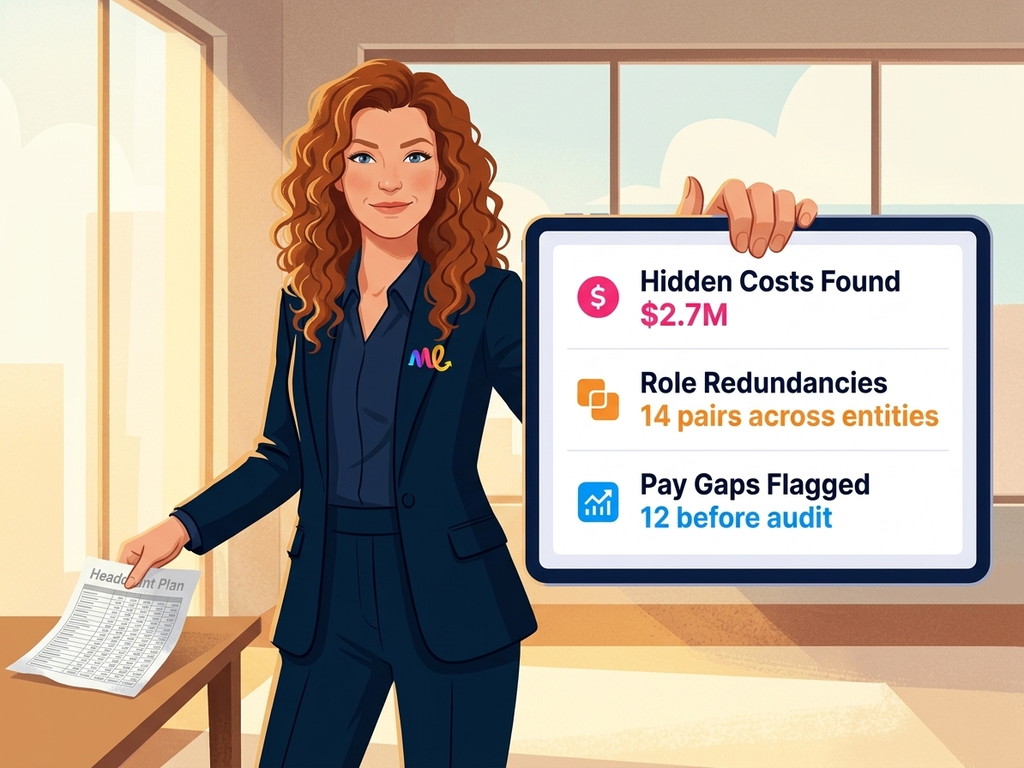
- Compensation Equity Analysis
- Monitors pay across gender, nationality, and tenure dimensions continuously. Flags statistically significant gaps with remediation cost projections per entity.
- Restructuring Simulation
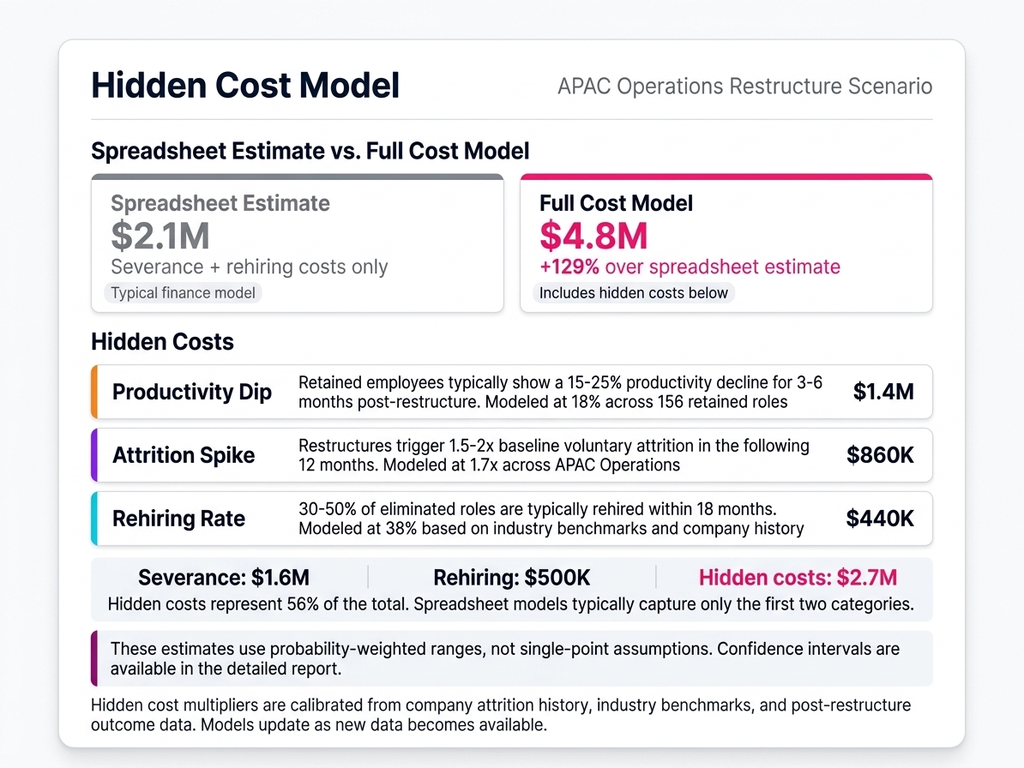
- Models 15+ cost dimensions from severance to rehiring probability. Produces probability-weighted outcomes, not a single spreadsheet estimate.
- Role Redundancy Detection
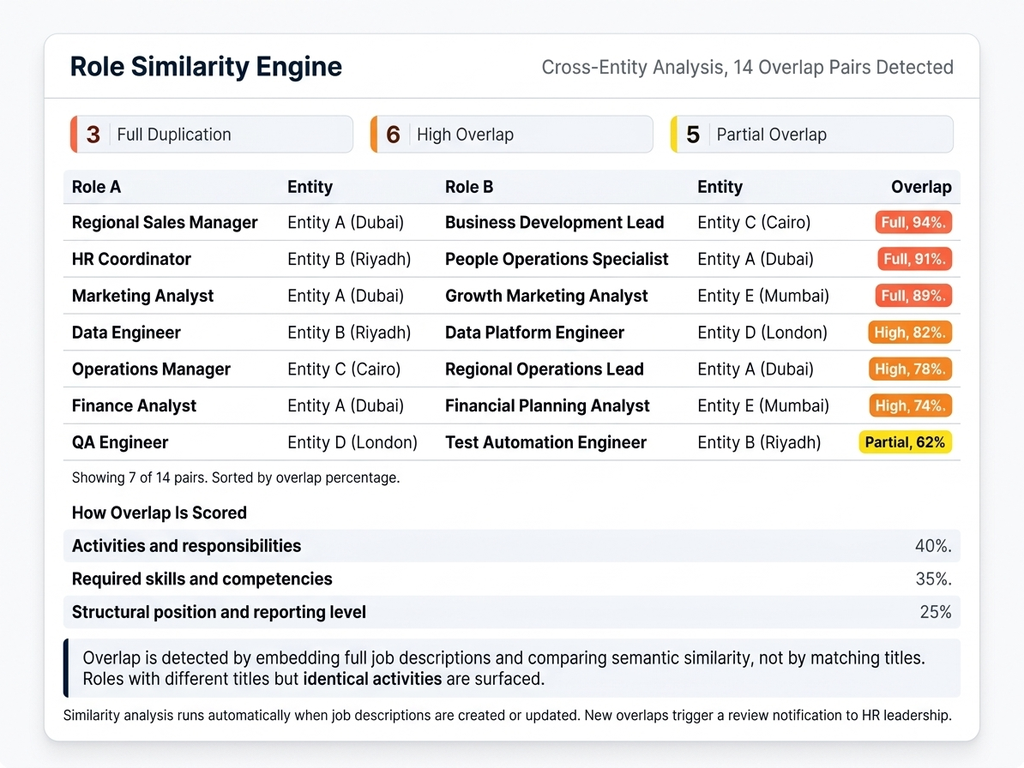
- Compares job descriptions, activities, and skills across entities using semantic analysis. Surfaces overlap that title matching misses entirely.
- Capacity Utilization Intelligence
- Calculates composite utilization scores per team from hours, project load, output metrics, and overtime. Flags overload before burnout hits.
- Cross-Entity Benchmarking
- Normalizes workforce metrics across entities with different systems, job architectures, and rating scales. Context-adjusted, not naive comparison.
- Demographics Forecasting
- Projects workforce composition at 3, 5, and 10-year horizons. Models retirement waves, nationalization trajectories, and skill distribution shifts.
See the org clearly. Act with confidence.
Ask Meg about pay equity, restructuring, or workforce composition. Real answers from real data. No consultants required.
Common prompts (click to see!)
Meg AIGender Pay Gap
8.4%
Adjusted for role/level
Ethnicity Gap
6.1%
Adjusted
Remediation Cost
$340K
To close gaps
Legal Risk
Medium
3 flagged cases
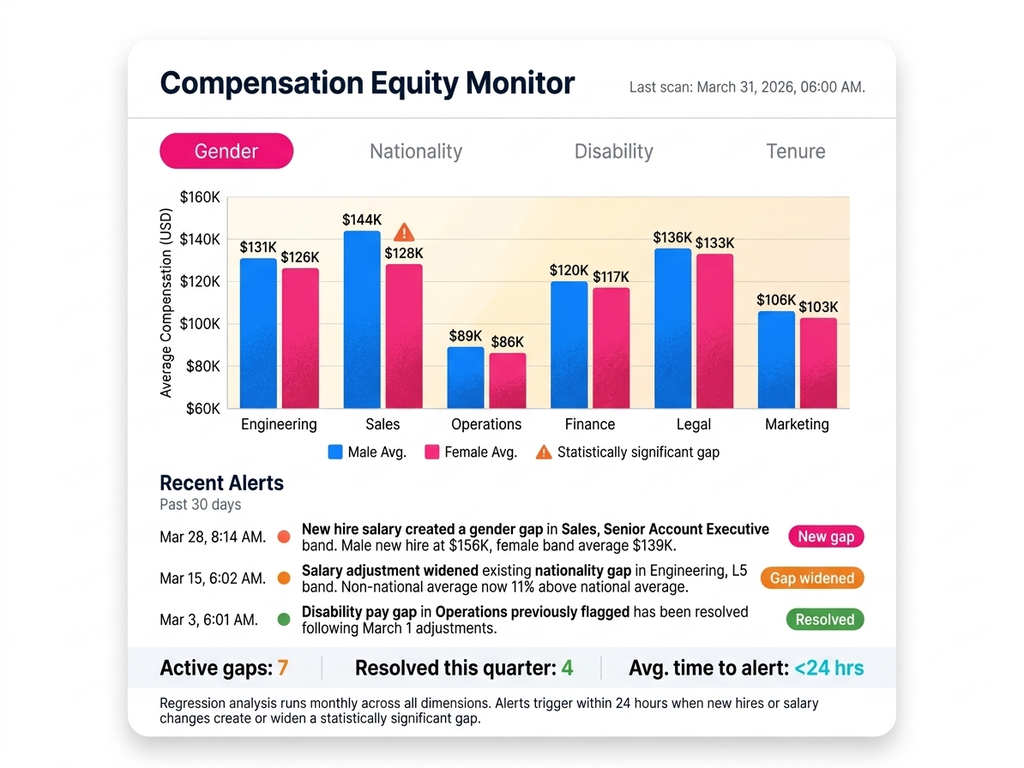
Pay Equity Intelligence
Find the Pay Gaps Before Regulators Do
Multivariate regression isolates pay gaps unexplained by role, experience, or performance. The system generates remediation scenarios with precise cost projections so leadership acts before regulators arrive.
Restructuring Intelligence
Model the True Cost of Change Before You Commit
Restructurings fail 60% of the time because the business case counts salary savings and ignores everything else. The platform models severance, productivity loss, attrition spikes, and rehiring costs in one simulation.
Organizational Design
See Where Roles Overlap, Layers Stack, and Capacity Breaks
Semantic analysis of job descriptions surfaces role overlap that title matching misses. Span of control monitoring catches layer bloat. Utilization scoring spots teams near burnout and teams sitting on excess capacity.
See the whole org. Find the inefficiencies.
Meg surfaces pay gaps, redundancies, and restructuring scenarios in seconds.
How it works
From fragmented data to one clear picture
How Meg consolidates workforce data across entities and surfaces optimization opportunities.
Ingest
Consolidate Data Across Entities
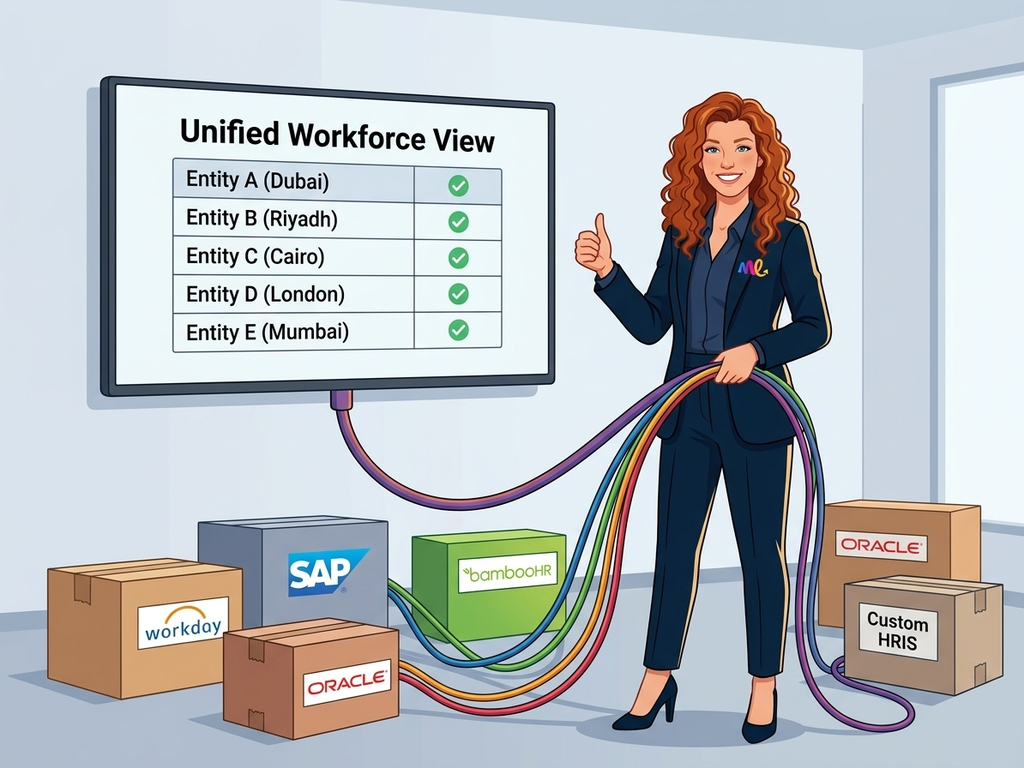
Meg normalizes data from multiple HRIS platforms, compensation systems, and org structures into one unified view. Works across subsidiaries, regions, and acquired companies with different systems.
Ingest
Consolidate Data Across Entities
Meg normalizes data from multiple HRIS platforms, compensation systems, and org structures into one unified view. Works across subsidiaries, regions, and acquired companies with different systems.
Baseline
Establish Cost and Efficiency Benchmarks
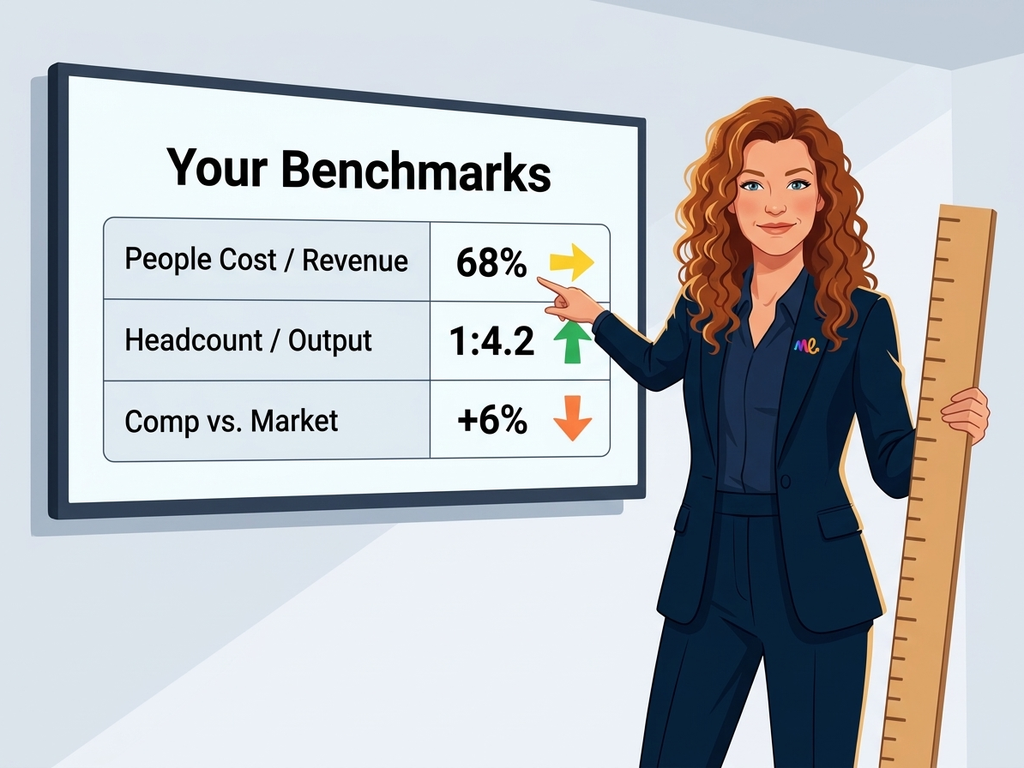
People cost as a percentage of revenue, headcount-to-output ratios, and compensation benchmarks are calculated automatically. You see where you stand before making any changes.
Baseline
Establish Cost and Efficiency Benchmarks
People cost as a percentage of revenue, headcount-to-output ratios, and compensation benchmarks are calculated automatically. You see where you stand before making any changes.
Detect
Surface Redundancies and Inequities
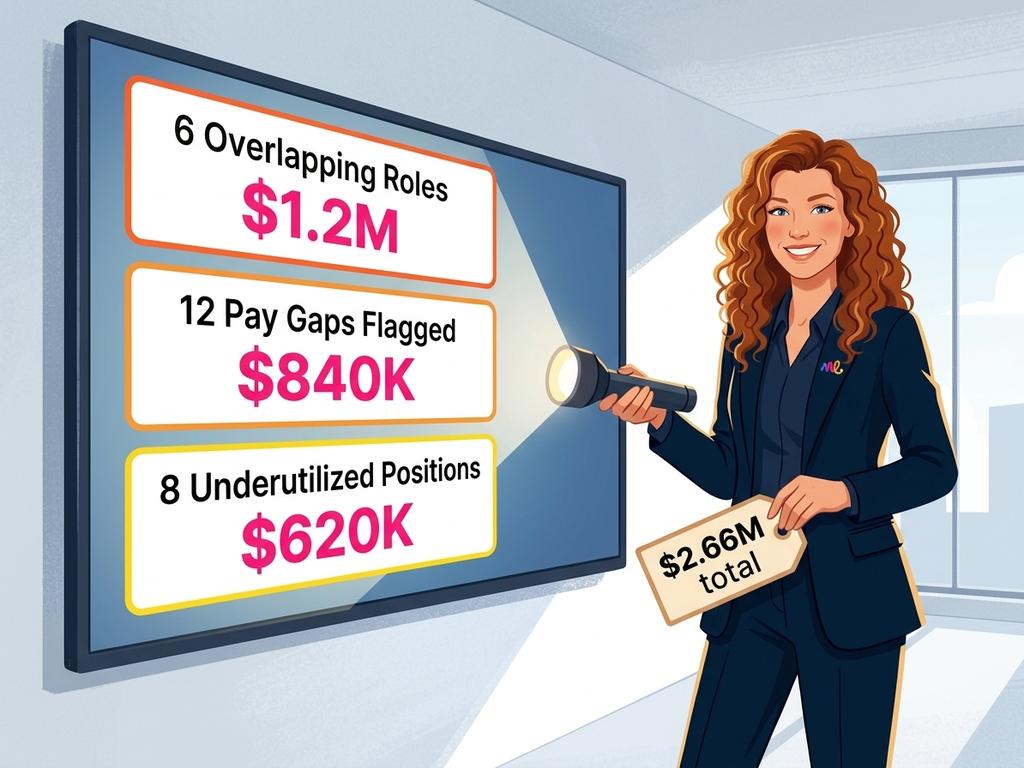
Overlapping roles across entities, pay equity gaps by gender and ethnicity, and underutilized positions are flagged with dollar values attached. Every finding comes with a cost of inaction.
Detect
Surface Redundancies and Inequities
Overlapping roles across entities, pay equity gaps by gender and ethnicity, and underutilized positions are flagged with dollar values attached. Every finding comes with a cost of inaction.
Simulate
Model Restructuring Scenarios
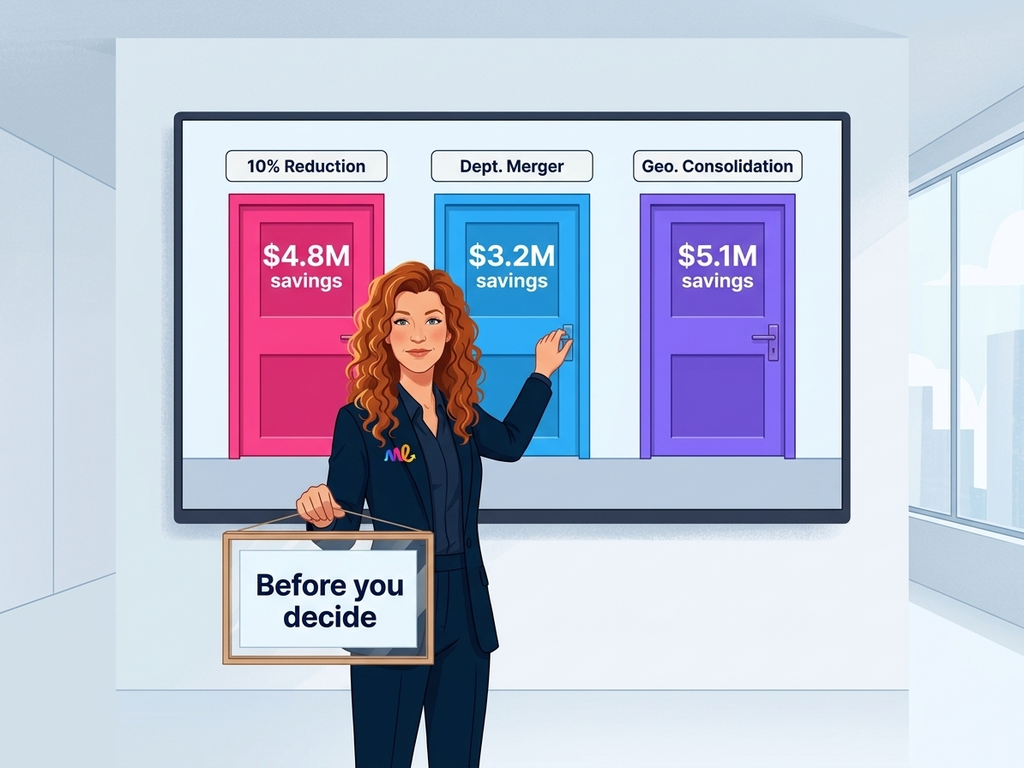
Run what-if scenarios like 10% reduction, department merger, or geographic consolidation, and see projected savings, capability impact, and risk exposure before making any decision.
Simulate
Model Restructuring Scenarios
Run what-if scenarios like 10% reduction, department merger, or geographic consolidation, and see projected savings, capability impact, and risk exposure before making any decision.
Execute
Implement with Precision
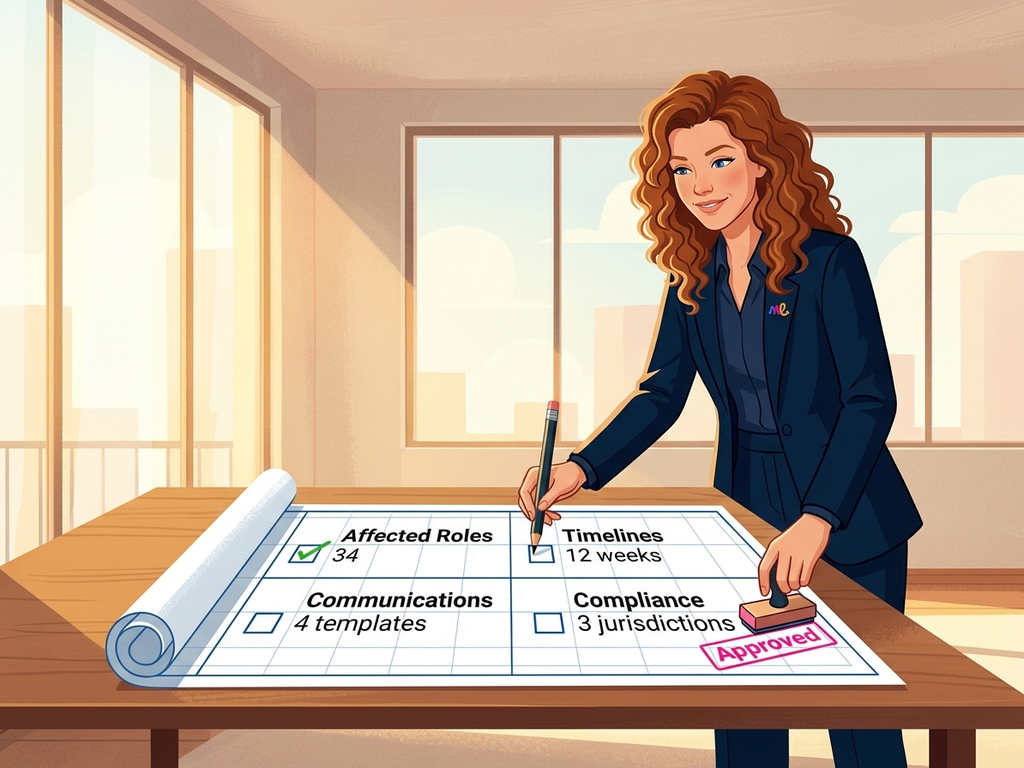
Once a scenario is approved, Meg generates the execution plan: affected roles, transition timelines, communication templates, and compliance checklists for each jurisdiction.
Execute
Implement with Precision
Once a scenario is approved, Meg generates the execution plan: affected roles, transition timelines, communication templates, and compliance checklists for each jurisdiction.
Forecast
Project Workforce Composition Forward
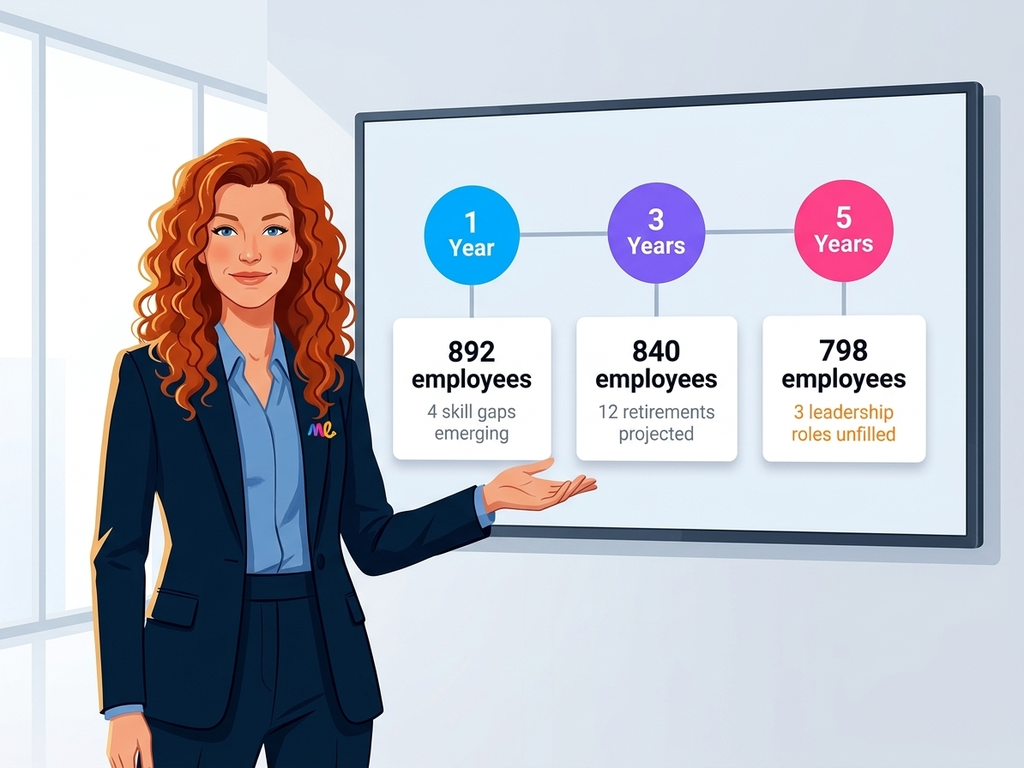
See what your org looks like in 1, 3, and 5 years under current trends. Attrition projections, skill gap forecasts, and leadership pipeline health, all modeled continuously.
Forecast
Project Workforce Composition Forward
See what your org looks like in 1, 3, and 5 years under current trends. Attrition projections, skill gap forecasts, and leadership pipeline health, all modeled continuously.
Pricing
Simple, transparent pricing
Start with a single role or scale across the whole company.
Acquire & Retain
Unlimited hiring, retention intelligence, and internal mobility.
Get StartedDevelop & Succeed
Add succession planning, skill gaps, and leadership development.
Get StartedAll plans include Slack, Teams, and WhatsApp access. See full comparison
Common Questions
What Technical Buyers Ask About Workforce Optimization
Direct answers to the questions we hear most from CHROs, CFOs, and workforce planning teams evaluating optimization intelligence.

- How does pay equity analysis handle multi-entity organizations with different job architectures?
- Normalizes roles to a standardized taxonomy using NLP analysis of job descriptions, not title matching. Creates consistent families and levels across entities. Regression then controls for role, experience, performance, and market conditions to isolate gaps attributable to protected characteristics.
- What data does restructuring simulation need to produce reliable results?
- Core requirements: compensation from HRIS and payroll, cost center structure from ERP, and severance policies per entity. Starts with direct costs and adds hidden dimensions as integration matures. Historical restructuring outcomes, where available, calibrate attrition and rehiring probability estimates.
- How does the platform detect role redundancy without relying on job titles?
- Embeds job descriptions and compares them using cosine similarity, then enriches with activity data from performance reviews, project assignments, and skills assessments. A composite score across text, activity, skill, and structural dimensions identifies overlap that title matching misses.
- How far out can workforce demographic projections reliably forecast?
- 3-year projections carry the highest confidence using calibrated attrition models and known hiring plans. 5-year projections are reliable for retirement waves and nationalization since those demographics move slowly. 10-year projections use wider confidence intervals, best suited for strategic planning.
- Does organizational network analysis read employee emails or messages?
- Never. The system ingests metadata only: who communicated with whom, meeting attendance, project co-assignments. Never accesses message content, email bodies, or subject lines. Individual metrics go to authorized analysts only. Leadership reporting aggregates to team and department level.
- How quickly does workforce optimization intelligence deliver value?
- Pay equity produces first actionable gaps within 6-8 weeks of HRIS and payroll integration. Span of control insights appear within 2-4 weeks. Cross-entity benchmarking requires 8-12 weeks for normalization. Full restructuring simulation with Monte Carlo matures between months 4 and 6.
Your Workforce Is Your Largest Investment. Optimize It.
See how the platform models restructuring scenarios, surfaces pay inequities, detects redundancy, and forecasts workforce composition. Bring your toughest question.