Predict Who Will Leave. Intervene Before They Do.
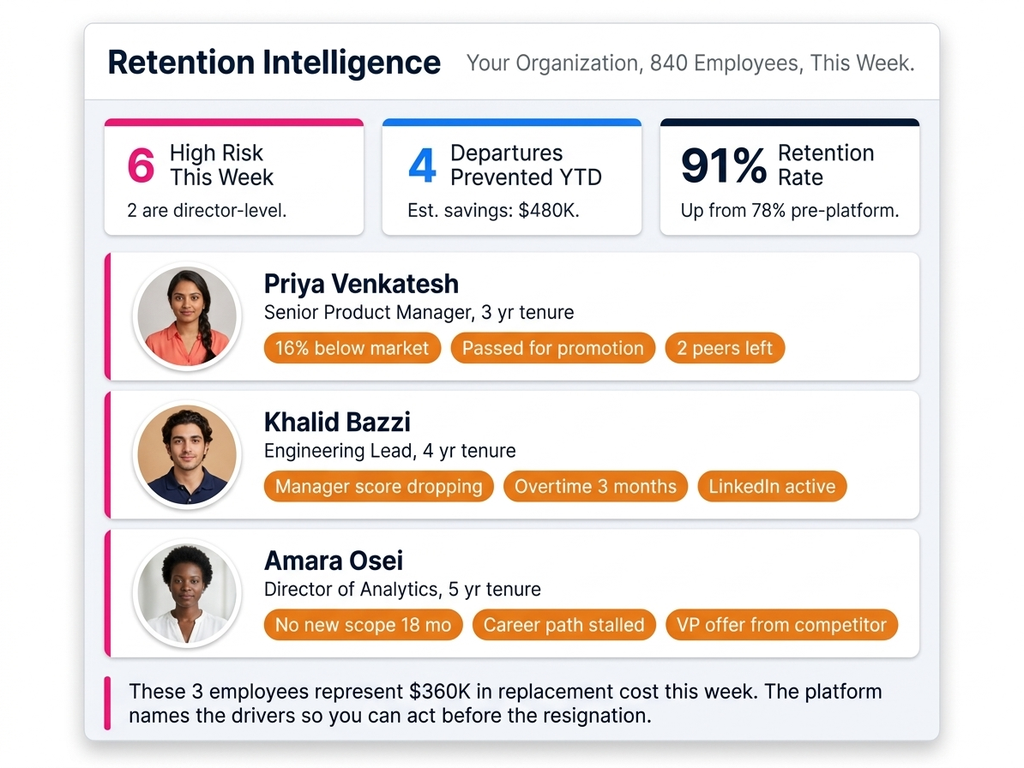
The platform ingests signals across your HR ecosystem, scores every employee's flight risk weekly, identifies the drivers behind each risk, and recommends interventions calibrated to each individual.
Platform Overview
Retention That Moves Faster Than Resignation Letters
Organizations discover flight risk from resignation letters, months too late. The platform connects compensation, engagement, and behavioral signals into continuous intelligence that acts while outcomes are changeable.

- Flight Risk Scoring
- Scores every employee weekly on departure probability using behavioral, systemic, and contextual signals. Re-scores immediately on high-signal events.
- Engagement Pulse Monitoring
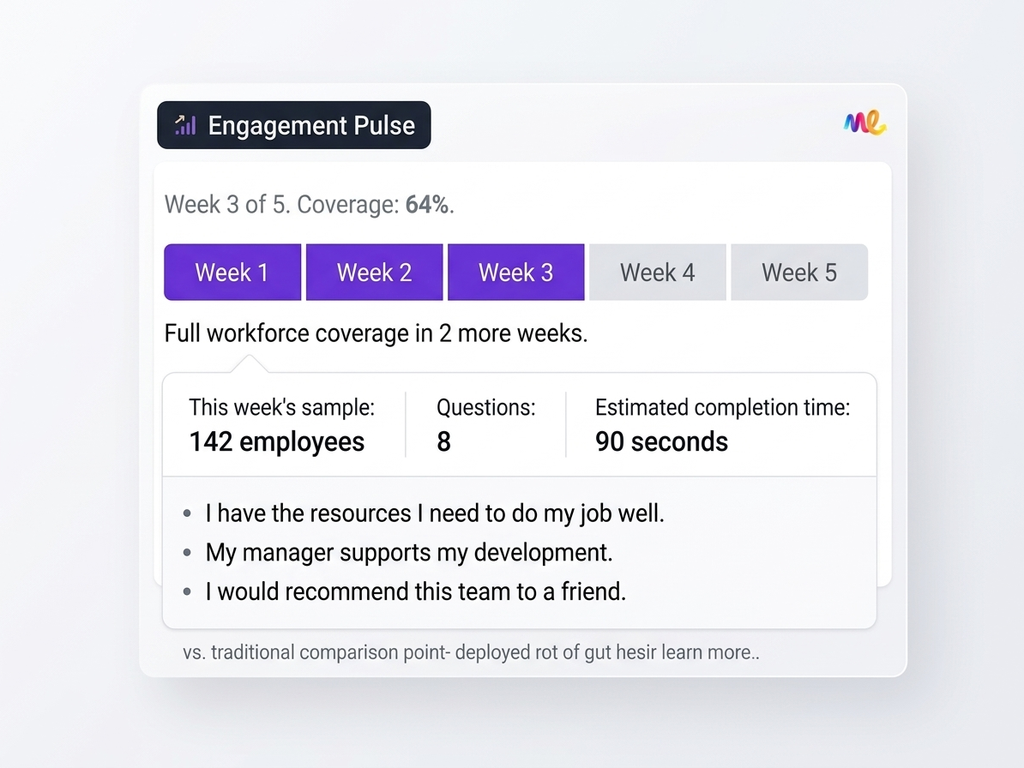
- Replaces annual surveys with continuous micro-pulses and behavioral proxies. Surfaces engagement shifts within days, not after a six-month reporting lag.
- Exit Pattern Decomposition
- Breaks turnover apart by department, tenure band, manager, performance tier, and timing. Identifies conditions that precede departure waves.
- Manager Retention Scoring
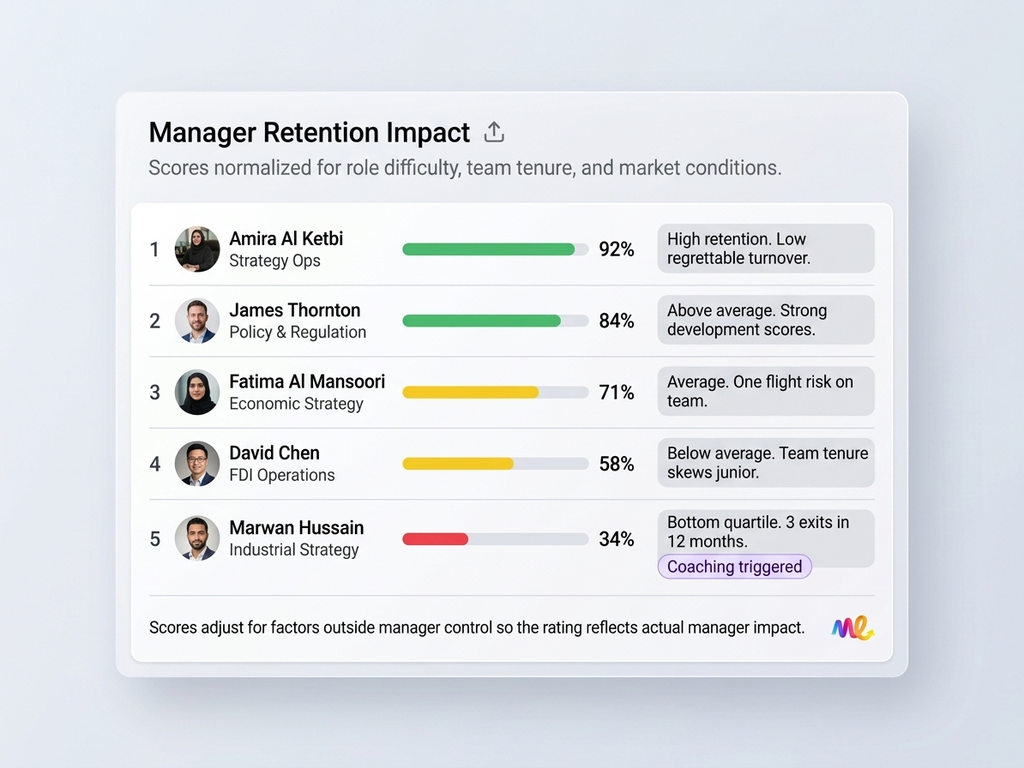
- Quantifies each manager's retention impact with context-adjusted scorecards. Separates inherited turnover from turnover the manager generated.
- Compensation Gap Detection
- Compares total compensation against real-time market benchmarks monthly. Flags where pay gaps create retention risk before recruiters do.
- Intervention Orchestration
- Triggers stay interviews, generates tailored conversation guides, tracks commitments, and measures whether interventions actually reduce risk.

Know who is leaving before they do.
Ask Meg a plain-English question about your workforce. Get the answer in seconds, not after a quarterly review.
Common prompts (click to see!)
Meg AI90-Day Attrition Risk by Team
Platform Engineering has 3 tenured ICs with stale comp and no promotion path. Two have active LinkedIn profiles.
Predictive Engine
Score Flight Risk Before the First Interview Happens
Ingests data from HRIS, performance, compensation, engagement, learning, and market systems to produce individualized risk scores updated weekly. Prediction accuracy reaches 75-85% within the first year of operation.
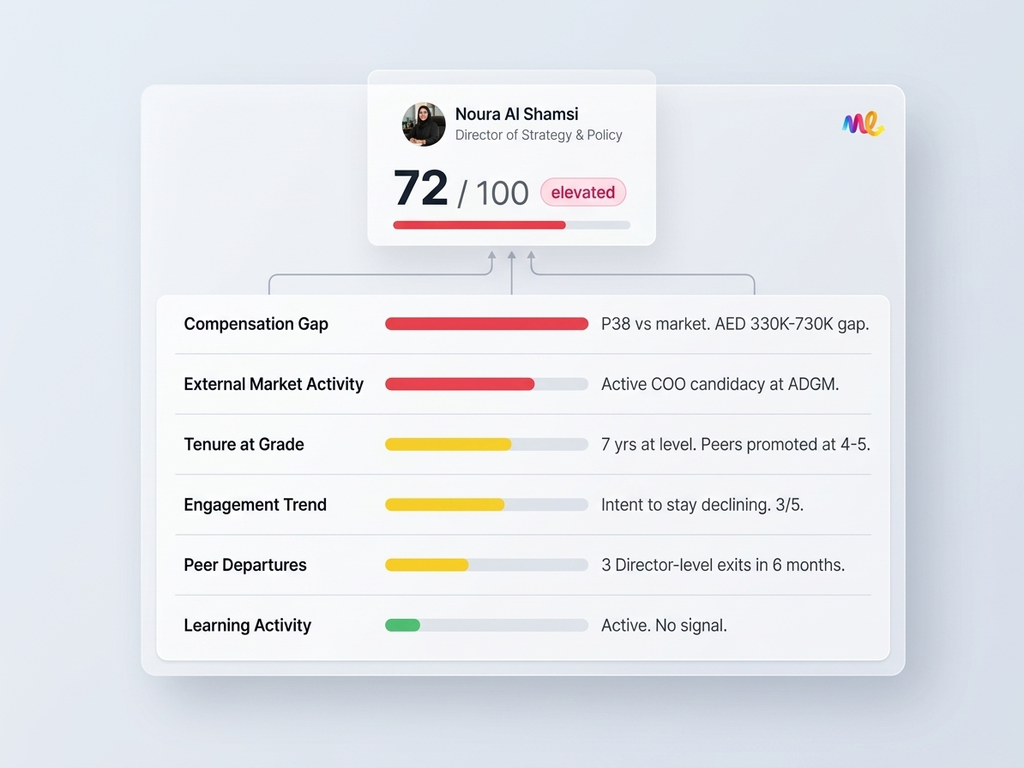
Signal Intelligence
Detect Engagement Shifts and Turnover Patterns in Real Time
Replaces annual surveys with weekly micro-pulses and behavioral proxies. Exit pattern analysis transforms raw turnover data into structured intelligence about why people leave, when, and which populations are exposed.
Targeted Intervention
Act on the Right People with the Right Lever at the Right Time
Manager coaching, compensation adjustments, and career conversations work when targeted at specific drivers for specific people. The platform matches risk factors to proven interventions and tracks outcomes.
Stop losing people you can not afford to replace.
Meg identifies flight risks before resignation letters land on your desk.
How it works
From data to intervention in days
How Meg identifies flight risks and deploys targeted retention actions before it is too late.
Connect
Integrate Your People Data
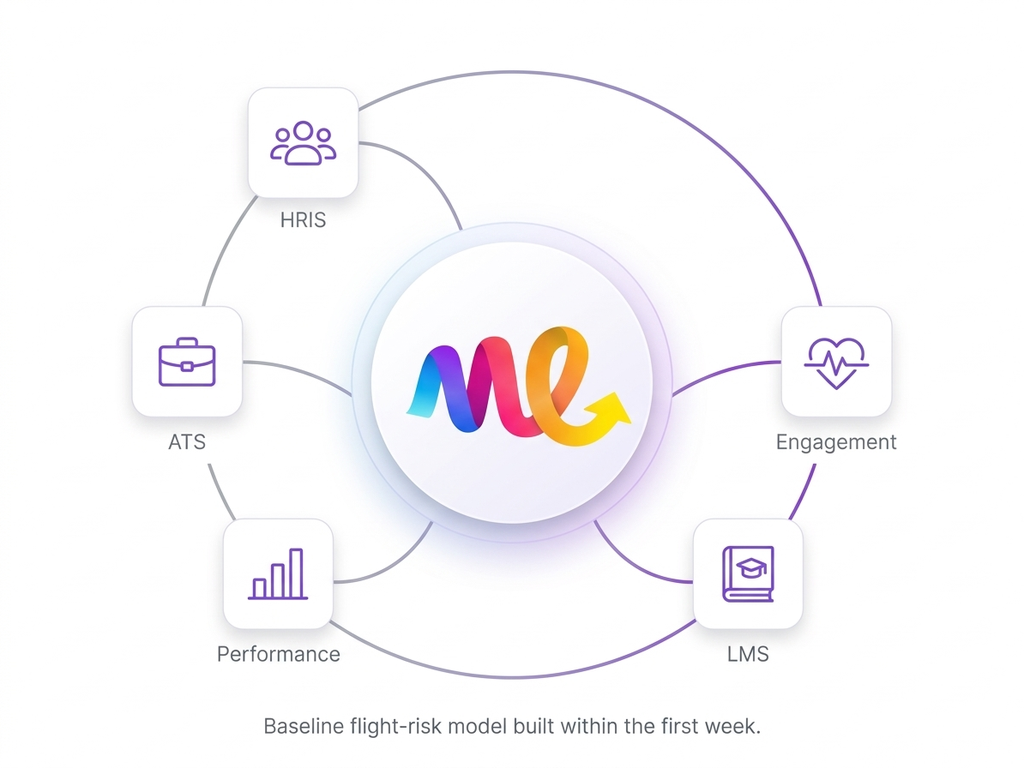
Connect your HRIS, ATS, and engagement tools. Meg ingests compensation, tenure, performance, and survey data to build a baseline flight-risk model within the first week.
Connect
Integrate Your People Data
Connect your HRIS, ATS, and engagement tools. Meg ingests compensation, tenure, performance, and survey data to build a baseline flight-risk model within the first week.
Detect
Surface Flight Risks Early
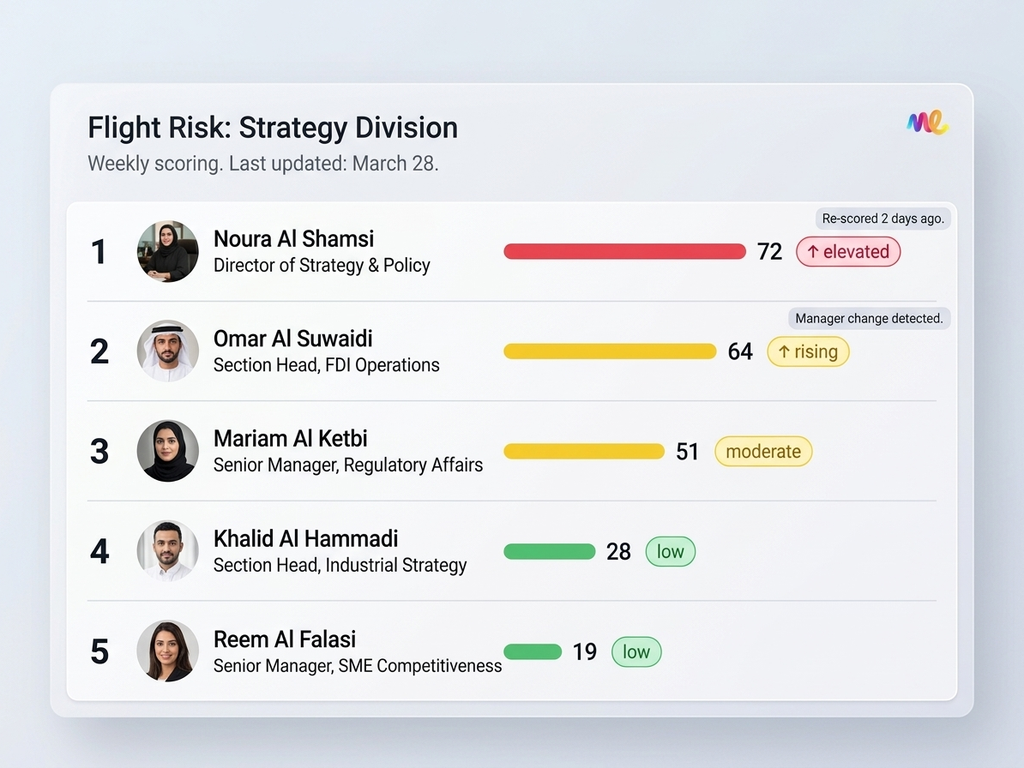
Weekly scoring identifies employees showing departure signals like compensation gaps, engagement drops, manager friction, and market pull. Risks surface 60-90 days before resignation.
Detect
Surface Flight Risks Early
Weekly scoring identifies employees showing departure signals like compensation gaps, engagement drops, manager friction, and market pull. Risks surface 60-90 days before resignation.
Diagnose
Understand the Why Behind Each Risk
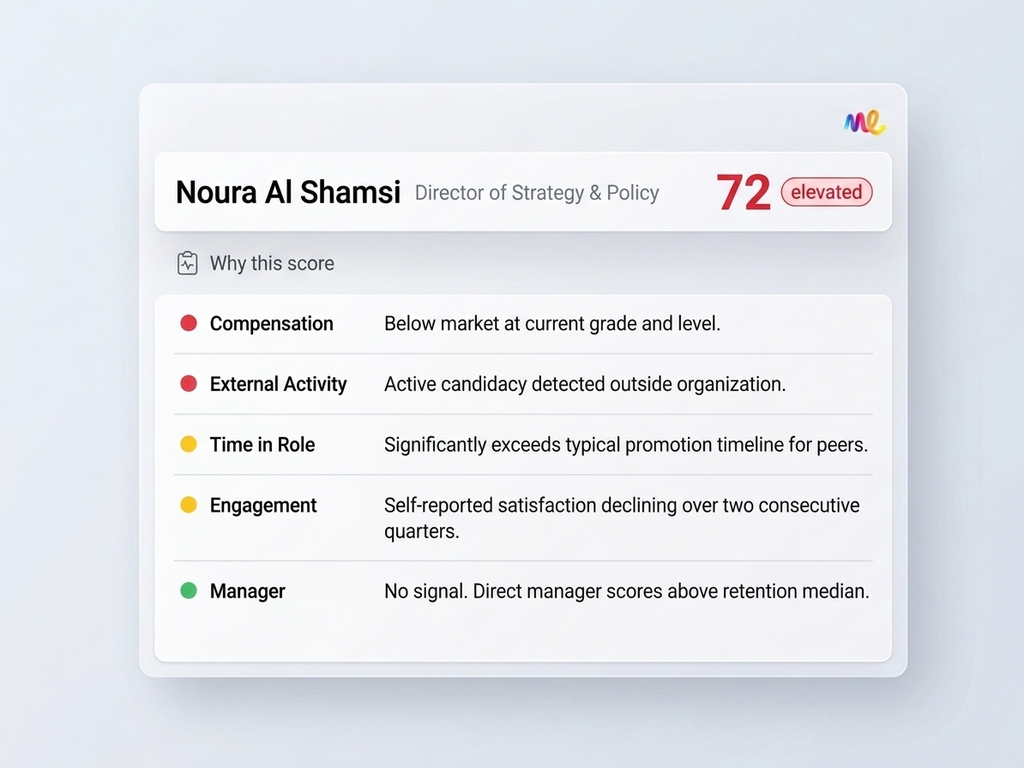
Every flagged employee comes with driver attribution. Is it comp? Growth? Manager? Workload? The diagnosis determines which intervention has the highest probability of success.
Diagnose
Understand the Why Behind Each Risk
Every flagged employee comes with driver attribution. Is it comp? Growth? Manager? Workload? The diagnosis determines which intervention has the highest probability of success.
Intervene
Deploy Targeted Retention Actions
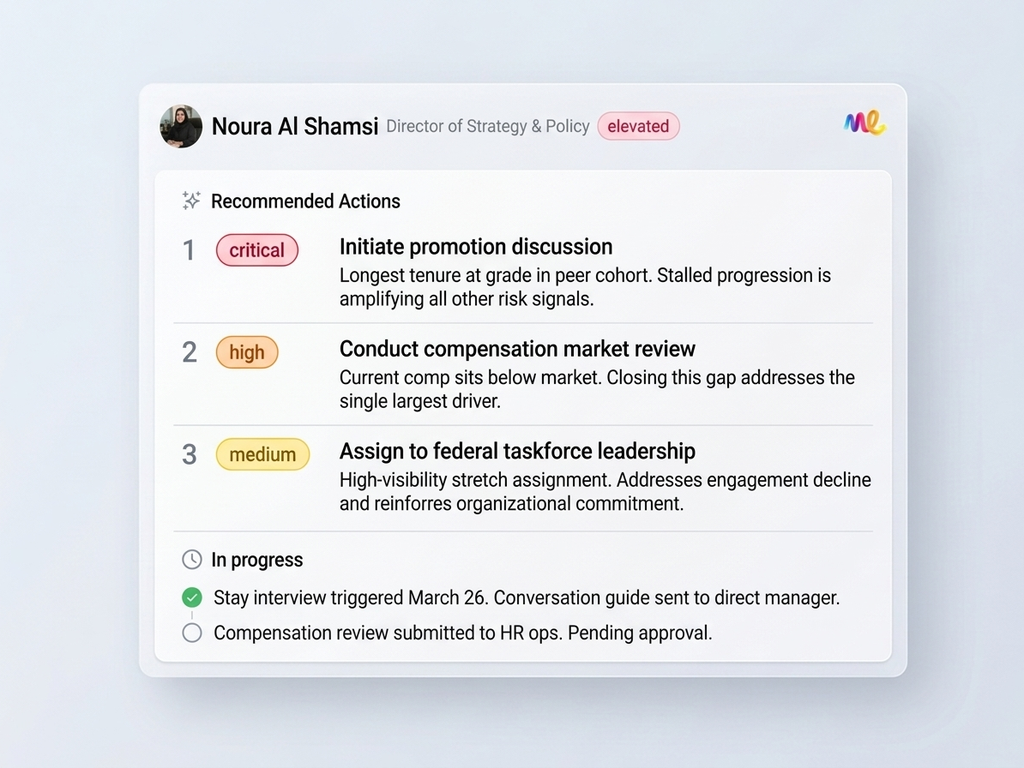
Meg recommends specific interventions for each at-risk employee: stay conversations, compensation adjustments, role changes, or development opportunities, ranked by likely impact.
Intervene
Deploy Targeted Retention Actions
Meg recommends specific interventions for each at-risk employee: stay conversations, compensation adjustments, role changes, or development opportunities, ranked by likely impact.
Measure
Track What Worked and What Didn't
Every intervention is tracked to outcome. Did the stay conversation work? Did the comp adjustment change the risk score? The model learns which actions actually retain people at your company.
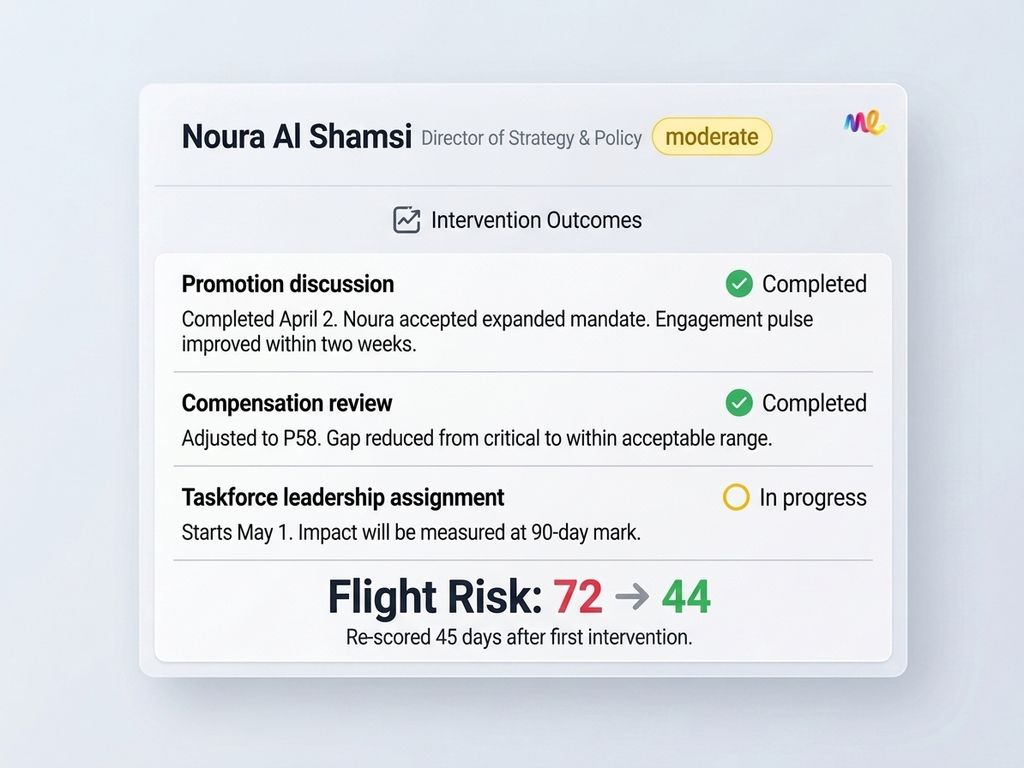
Measure
Track What Worked and What Didn't
Every intervention is tracked to outcome. Did the stay conversation work? Did the comp adjustment change the risk score? The model learns which actions actually retain people at your company.
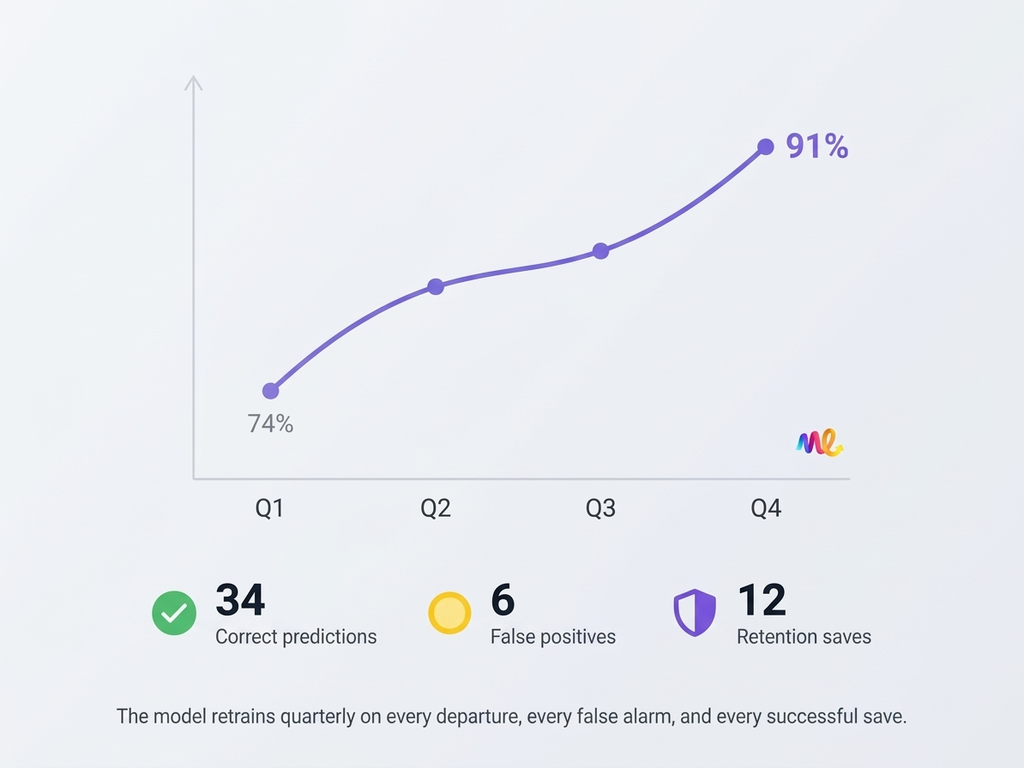
Compound
Each Quarter Gets Sharper
Retention predictions improve with every data point. By quarter three, the model identifies at-risk employees with 85%+ accuracy and recommends interventions with proven track records.
Compound
Each Quarter Gets Sharper
Retention predictions improve with every data point. By quarter three, the model identifies at-risk employees with 85%+ accuracy and recommends interventions with proven track records.
Pricing
Simple, transparent pricing
Start with a single role or scale across the whole company.
Acquire & Retain
Unlimited hiring, retention intelligence, and internal mobility.
Get StartedDevelop & Succeed
Add succession planning, skill gaps, and leadership development.
Get StartedAll plans include Slack, Teams, and WhatsApp access. See full comparison
Common Questions
What Technical Buyers Ask About Retention Intelligence
Direct answers to the questions we hear most from CHROs, HRBPs, and technical teams evaluating retention intelligence capabilities.

- How accurate is flight risk prediction, and how long before it becomes reliable?
- Baseline accuracy starts at 60-65% using industry patterns and behavioral signals from month one. As the model trains on your organization's actual departures, accuracy reaches 75-85% within 12 months. The model retrains quarterly. Every departure and every successful intervention improves the next cycle.
- What data does the platform need from our existing HR systems?
- Core requirements: HRIS employee records, departure history, and performance data. Accuracy improves with compensation benchmarks, engagement surveys, LMS activity, and collaboration signals. Integrates with Workday, SuccessFactors, Oracle HCM, BambooHR, and major survey and LMS platforms via REST APIs and webhooks.
- How does the system handle employee privacy and data sensitivity?
- Engagement surveys enforce minimum reporting units of five respondents. Behavioral signals use aggregate metrics only. No email or message content is read. Manager views show anonymized benchmarks, never individual team member scores. All qualitative analysis produces anonymized summaries.
- Can managers see individual flight risk scores for their direct reports?
- Configurable per organization. The default routes individual risk alerts to HRBPs who facilitate conversations. Managers see team-level health indicators and engagement dimensions, not individual risk numbers. This prevents conversations from becoming "we know you are thinking of leaving."
- How does compensation monitoring work with complex package structures?
- Normalizes total packages: base salary, bonus, equity, and region-specific components like housing, education, and transportation allowances. For GCC markets, includes end-of-service gratuity and annual flight provisions. Benchmarks against multiple market data providers refreshed monthly.
- What is the typical ROI timeline for retention intelligence?
- Exit pattern analysis delivers insight in 2-3 weeks. Flight risk scoring produces actionable alerts by month two. Organizations with 5,000+ employees typically prevent $4-8M in regrettable departures within the first year. Each prevented departure saves $50,000-$200,000 in direct replacement costs alone.
Your Best People are Being Recruited.
See which employees are at risk, what is driving it, and which interventions will change the outcome. Bring your retention challenge to the demo.